
-
Products
- ADHD
- Alzheimer's
- Anti-anxiety & Antidepressants
- Anti-biotics
- Anti-cancer
- Anti-fungal
- Anti-parasitic
- Antiallergic
- Antiviral
- Ayurvedic Healing
- Corticosteroids
- Eye Care
- Gastrointestinal
- Hair Health
- Heart Health
- Hormone Therapy
- Migraine
- Nutraceutical
- Others
- Pain Management
- Sexual Wellness
- Skin Wellness
- Sleep Disorder
- Steroids
- Thyroid Treatment
- Weight Management
-
Products
- ADHD
- Alzheimer's
- Anti-anxiety & Antidepressants
- Anti-biotics
- Anti-cancer
- Anti-fungal
- Anti-parasitic
- Antiallergic
- Antiviral
- Ayurvedic Healing
- Corticosteroids
- Eye Care
- Gastrointestinal
- Hair Health
- Heart Health
- Hormone Therapy
- Migraine
- Nutraceutical
- Others
- Pain Management
- Sexual Wellness
- Skin Wellness
- Sleep Disorder
- Steroids
- Thyroid Treatment
- Weight Management
- Home
- Blog
- The evolving therapeutic uses of modafinil: from narcolepsy to cognitive enhancement applications
The evolving therapeutic uses of modafinil: from narcolepsy to cognitive enhancement applications
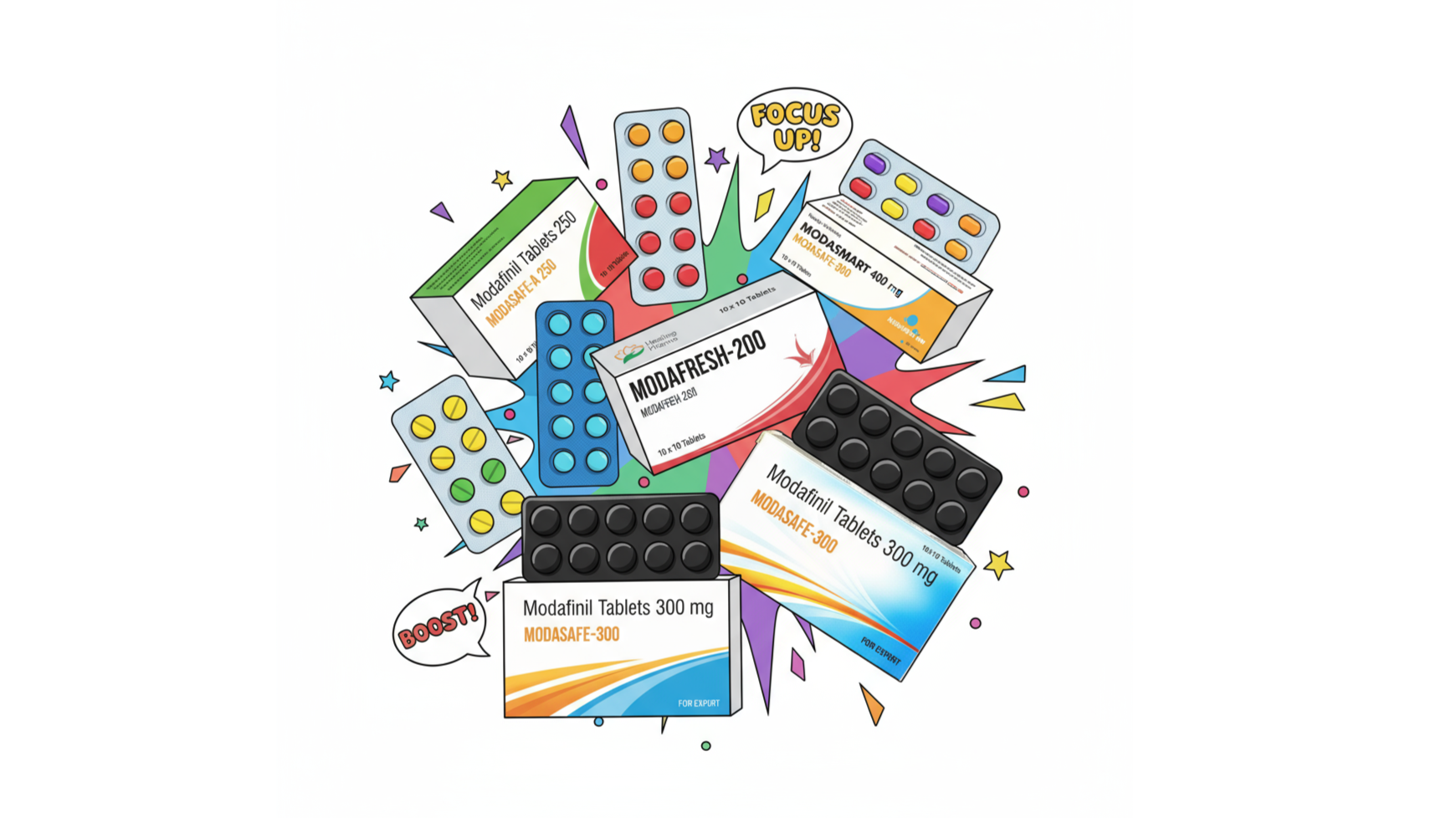
Modafinil has evolved from its original approval as a treatment for narcolepsy to becoming a widely discussed agent in sleep medicine, cognitive neuroscience, and clinical psychiatry due to its expanding therapeutic and off label uses.
Introduction
Modafinil is a wakefulness promoting drug originally developed to combat excessive daytime sleepiness in narcolepsy, a condition characterized by sudden sleep attacks and persistent sleepiness. From its early clinical adoption, modafinil stood out for its relatively low risk of abuse and absence of major cardiovascular side effects compared to traditional stimulants.
Approved Therapeutic Uses
The primary indications for modafinil include:
- Narcolepsy: Modafinil helps patients remain awake and functional during daytime hours without treating cataplexy, a related narcolepsy symptom.
- Obstructive Sleep Apnea/Hypopnea Syndrome (OSAHS): Used alongside breathing devices when excessive sleepiness persists despite optimal therapy.
- Shift Work Sleep Disorder (SWSD): Modafinil is prescribed to improve alertness and reduce error rates among people working night shifts or rotating schedules.
These approved uses have made modafinil a first line pharmacological choice for managing sleep-induced functional impairment without the high stimulation and dependency risk typical of older drugs like amphetamines.
Expanding Clinical Indications
Beyond these core indications, researchers have explored modafinil’s benefits in various fatigue syndromes, resistant depression, multiple sclerosis, Parkinson’s disease, and post-cancer fatigue, all of which feature persistent tiredness or decreased motivation. Although data support its efficacy in relieving daytime fatigue, large-scale studies are ongoing to clarify safety and effectiveness across populations.
Cognitive Enhancement Applications
Modafinil’s off-label rise owes much to research on its pro-cognitive effects.
- In sleep-deprived individuals, modafinil reliably enhances working memory, vigilance, and executive function, often outperforming caffeine or amphetamines in maintaining performance.
- In healthy adults, studies have shown small but significant improvements in task performance, sustained attention, and impulse control without marked side effects, though results vary and improvements remain modest outside sleep-deprived groups.
- Clinical trials in populations with mental disorders (such as schizophrenia or ADHD) illustrate modafinil’s potential as an adjunct for impaired cognition, although routine use in these contexts is not yet universally endorsed.
Mechanisms and Safety Profile
Unlike classical stimulants, modafinil appears to boost wakefulness and cognitive performance through diverse mechanisms, including modulating dopamine levels in the frontal cortex and influencing other neurotransmitter systems. Its moderate stimulation minimizes rebound hypersomnolence and abuse potential, broadening its acceptability among prescribers and users.
Conclusion
Modafinil is an exemplar of a drug whose therapeutic and practical uses have expanded due to favorable safety, broad efficacy, and discoveries in cognitive neuroscience. As research advances, its role may further grow into new areas of sleep medicine and neuropsychiatry, while ongoing debate addresses appropriate use, benefits, and societal impact.



- Home
- About Us
- Shipping Policy
- Our Products
- ADHD
- Alzheimer's
- Anti-anxiety & Antidepressants
- Anti-biotics
- Anti-cancer
- Anti-fungal
- Anti-parasitic
- Antiallergic
- Antiviral
- Ayurvedic Healing
- Corticosteroids
- Eye Care
- Gastrointestinal
- Hair Health
- Heart Health
- Hormone Therapy
- Migraine
- Nutraceutical
- Others
- Pain Management
- Sexual Wellness
- Skin Wellness
- Sleep Disorder
- Steroids
- Thyroid Treatment
- Weight Management
- Contact
- Download Brochure